The idea that Americans should be offered a greater choice of smaller cars has support from strange bedfellows indeed. After all, who could forget President Trump—usually one to take a maximalist approach to any problem—announcing last year that he wanted the Department of Transportation to make Japan’s diminutive “Kei” cars legal here in the US.
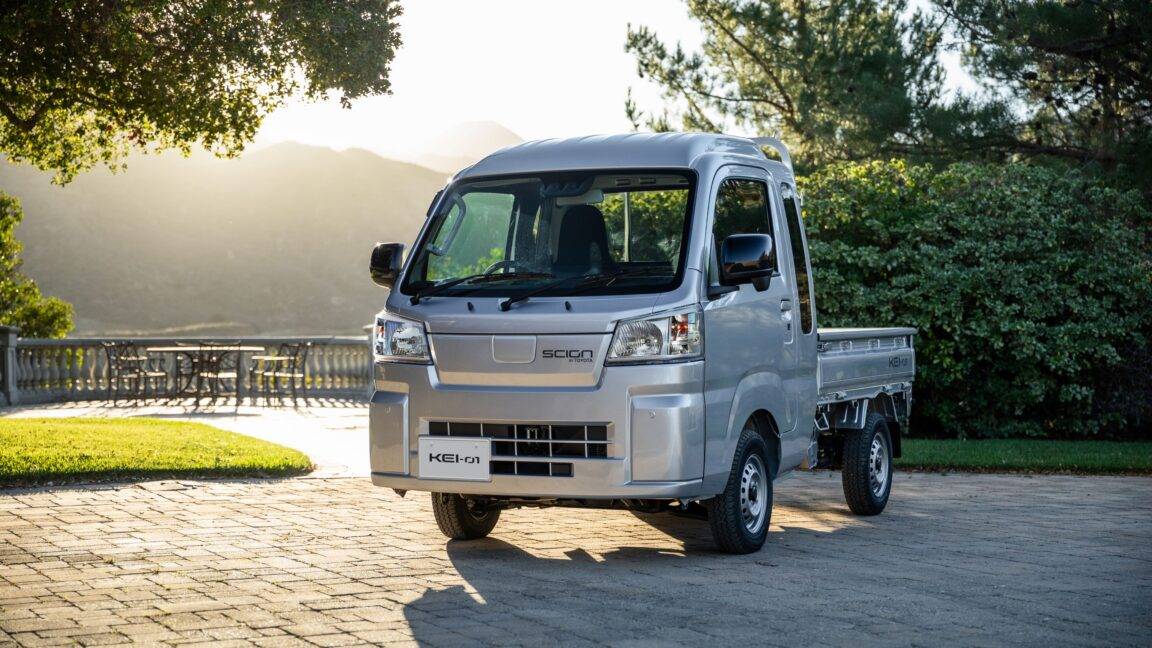
Ars’ attempts to get DoT to tell us more about the potential influx of little vehicles have mostly fallen on deaf ears. But this week, there has been movement on the topic, with Toyota announcing that it will bring back the Scion brand with the KEI-01.
What’s a Kei car?
In the US, the preponderance of humongous SUVs is a consequence largely of government policies, specifically corporate average fuel economy standards that made it less profitable to sell smaller, efficient cars. Japan’s Kei cars are what happens if the government instead restricts the size, engine capacity, and power output.
A Kei car must fit within the following dimensions: 11.2 feet (3.4 m) long, 4.9 feet (1.5 m) wide, and 6.6 feet (2 m) tall, with an engine displacement of no more than 0.66 L and an output of 63 hp (47 kW) or less. That’s a far cry from the more than 16 feet (4.9 m) of a full-size pickup truck, but it makes sense for a country where you’re not allowed to buy a car unless you have somewhere to park it, with those spaces being at an absolute premium.