A new tactic in the war over out-of-network bills: Health care providers are suing employers
Providers increasingly are suing employers, claiming they are responsible for out-of-network medical bills that insurers haven’t fully paid or have delayed paying.
By Bob Herman·9 min read
Natosha Via for STAT
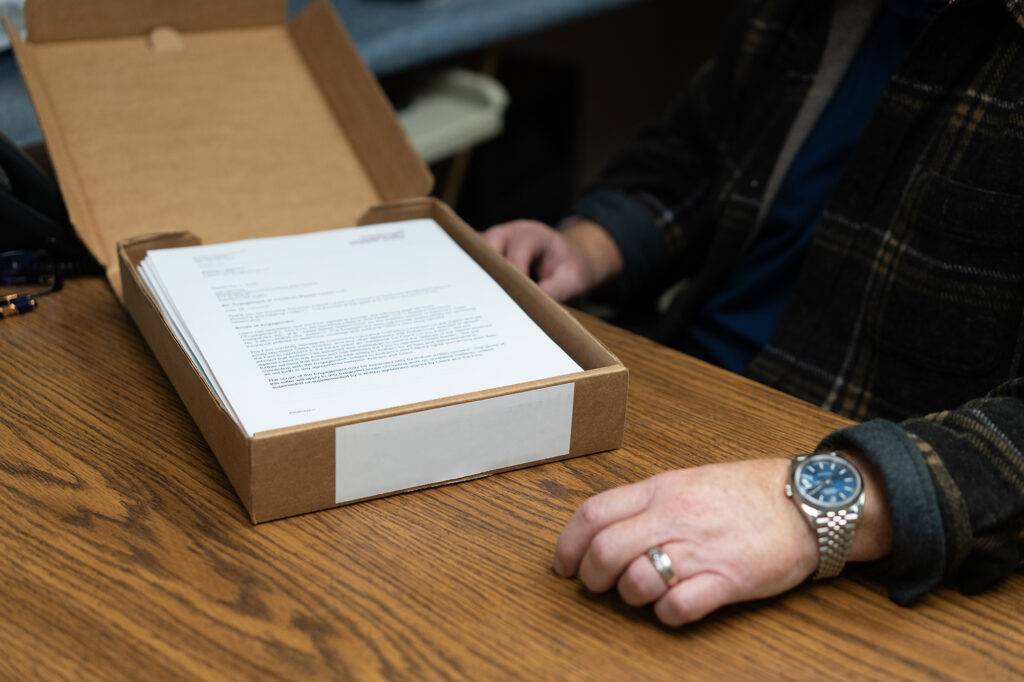
This past August, Joe Hancock, a Kentucky plumbing and heating contractor, opened a just-delivered box packed with hundreds of sheets of paper. Leafing through them, he read seven words no small business owner wants to see: “A lawsuit has been filed against you.”
The complaint, from air ambulance firm PHI Health, claimed Hancock was on the hook for almost $27,000 in medical helicopter bills. They were tied to one of his now-retired employees, who needed an emergency flight after a heart attack.
Hancock, who owns Whitehead-Hancock Plumbing, Heating & Cooling, a family-run business in Frankfort, Ky., that has been around for more than a century, didn’t understand why he was being roped into a lawsuit that featured 31 other companies — for medical charges he was never aware of.
“I was terrified,” Hancock said. “I was like, ‘What in the hell is going on here?’”
He’s not alone. The PHI lawsuit highlights an evolving tactic by health care providers in a raging battle over out-of-network bills. Previously, providers targeted health insurance companies to pay outstanding amounts that were awarded through federal mediation. Now, they increasingly are dragging the insurers’ clients — employers — into court, claiming they are responsible for bills that insurers haven’t fully paid or have delayed paying. The practice is introducing a new shock that could further torch the
In an April post , using millions of homeowner's insurance contracts matched with property-level exposure and disaster risk, we showed that although households are insured, they are still "on the hook” because deductibles and coverage limits leave homeowners responsible for part of a loss.
A court has ordered Allegheny County’s first full reassessment since 2012. A finance scholar explains how assessed values and millage rates add up to your tax bill.
AI can help startups reduce patent preparation costs, but DIY applications may overlook critical issues. In this guest commentary, attorneys Michael Drapkin and Nathan Mutter of AI-Native law firm Landfall IP, argue that combining AI with legal expertise can produce more efficient, commercially valuable patent…
“These big suits naming dozens of employers at a time is really an escalation,” said Garrett Hohimer, a vice president at the Business Group on Health. “And it will cause employers to incur expenses that [come directly] out of their health care plans.”
A 2022 law called the No Surprises Act shielded patients from the financial trauma of many types of unexpected medical bills, but it has also given rise to a vast industry that’s driving up costs across the health care system. The law uses an arbitration process to determine how much health care providers should get paid for out-of-network emergency care, like helicopter rides, for people who have some type of commercial health coverage. STAT has reported that providers are winning most of these arbitration awards, which often are far higher than the amounts in-network providers receive for the same services.
Already, high payments tied to this process have added approximately $20 billion in extra costs to the health care system, Georgetown University researchers have estimated. A large portion of those costs inevitably come out of the bank accounts of America’s employers and consequently lead to higher premiums, emphasizing how even well-intentioned health reforms can add to the financial pressure that’s crushing workers and businesses.
PHI Health, a national chain, is arguably the most aggressive company suing employers, which it claims are not “passive” bystanders in insurers’ refusal to fully pay awards. Other regional physician practices have sued some employers as well. But PHI and its army of attorneys have filed lawsuits against hundreds of companies, demanding they collectively pay tens of millions of dollars in unpaid out-of-network claims that it won in the federal arbitration process.
PHI isn’t just suing small, local firms like Hancock’s. It’s also taking legal action against some of the largest corporations — Amazon, Walmart, Eli Lilly, United Airlines, General Motors, PepsiCo, State Farm, and Toyota, to name a few — as well as unions, counties, cities, states, public school districts, and universities.
PHI has sued other health care organizations, including hospitals, nursing homes, and medical billing firms. It also has gone after nonprofits, such as the Catholic Diocese of Cleveland. In each instance, a worker or family member at these companies took an emergency medical helicopter, often at a cost of tens of thousands of dollars per trip.
In some cases, PHI wasn’t sure what company it should be suing, but sued anyway. Several lawsuits named specific health insurers and employers as defendants, and then added “ABC CORP” or “XYZ CORP” as a placeholder. If the insurer or employer “is not in fact the plan sponsor … that covers the patient transported by PHI, then the identity of the plan sponsor is unknown to PHI, and this action is instead brought against ABC CORP,” one lawsuit reads.
Katie Keith and Ellie DeGarmo are attorneys at Georgetown’s Center for Health Policy and the Law who have tracked No Surprises Act lawsuits, including those filed by PHI. They said the scores of cases reinforce the bloat in the health care system: above-market prices that providers are winning for not participating in an insurance company’s network, attempts from insurers to not pay at all or profit off lowball offers, and a booming revenue stream for arbitrators.
But trying to wring money out of employers — and, ultimately, from their workers — is a stark divergence from the public statements of physician groups and air ambulance companies, which have painted health insurers as the bad guys for not following the rules.
“It kind of undercuts the narrative that this is provider versus insurance company,” Keith said. “In this case, this is about provider versus everyone who pays for health care and is now stuck with the bill for [arbitration] awards that have gone totally off the rails.”
STAT reached out to more than two dozen employers that were listed in PHI’s lawsuits. Most did not respond to inquiries. Of those that did, most declined to comment.
“Because this matter involves pending litigation … we will not be providing any interviews,” said Clint Mitchell, the division superintendent of Spotsylvania County Public Schools in Fredericksburg, Va. PHI Health is suing Spotsylvania County’s school system for almost $28,000.
Jay Litten, the town manager of Bridgewater, Va., told STAT the town’s health insurer, Anthem Blue Cross Blue Shield, retained counsel and was handling the case. PHI sued Bridgewater in October for more than $37,000 in unpaid awards.
PHI has boasted about its success in the law’s arbitration process. In 2024, it told prospective investors that it was “able to maintain our profitability” by winning more than three out of every four arbitration claims, and it expected “this trend of favorable” outcomes from the process would continue.
The company has some private equity backing, according to financial filings from when the company considered going public in 2023. Its largest shareholder as of 2023 was Q Investments, a family office that has a private equity firm.
PHI declined to make anyone available for an interview. In a statement, CEO Scott McCarty defended the company’s lawsuits, saying the employers PHI has sued “have a duty to their employees and a responsibility to health care providers in their communities to abide by the law and pay for services delivered.”
McCarty said health insurers are asking their employer clients to choose between paying the unpaid arbitration amounts or authorizing the insurer to continue refusing payment.
“Once an employer is on notice of nonpayment and affirmatively endorses that practice, it is no longer a passive bystander,” McCarty said in the statement. “It has made a conscious decision to allow its insurance company not to pay binding federal awards in violation of federal law.”
In PHI’s lawsuits, the company alleges insurers, and now employers, are using an “unlawful scheme to ‘low pay, late pay, or no pay’ providers, including PHI.” All the cases are still pending.
The company also claims insurers float the money from unpaid awards, which are binding decisions, on the stock market as a way to earn extra interest or investment income.
James Gelfand, CEO of the ERISA Industry Committee, a lobbying group that represents large employers, said companies don’t condone insurers delaying payments as a way to make extra money. But he said under the federal law known as ERISA, employers are legally obligated to make sure they spend their health plan assets wisely on behalf of workers. If employers believe the awards are tied to ineligible claims — or are egregiously high compared with what they normally would pay — those payments could violate that obligation.
As a result, the employers’ health insurers “are operating with our blessing when we say, ‘Hey, if the [arbitration] award is inappropriate and wrong, do not pay it,’” he said. “How can we claim to be responsible stewards of people’s money if we’re just like, ‘Oh, here you go!’ That would be crazy.”
Jenny Goins, who is CEO of the National Alliance of Healthcare Purchaser Coalitions and used to oversee health benefits for Kentucky state employees, said “slow-walking the payments” to providers is one of the only ways employers can push back if they believe the awards are based on ineligible or incomplete claims. Medical claims are not eligible for arbitration if, for example, the employer or its health plan doesn’t cover a certain service or if there is certain information or data missing.
PHI has frequently named Anthem Blue Cross Blue Shield, owned by Elevance Health, as a defendant in the lawsuits against employers. Elevance did not make anyone available for an interview. The company said in a statement that PHI is charging prices for air ambulance services that are 700% of what Medicare pays and mileage rates that are 1,500% more than Medicare rates.
“We have already paid PHI substantial amounts for services provided to our members,” Elevance spokesperson Janey Kiryluik said in a statement. “We dispute whether additional amounts are legally owed for claims that were ineligible” for the arbitration process.
PHI said only arbitrators can determine the eligibility of claims. It added that the rates Medicare pays don’t cover the full cost of emergency air care, nor can those prices be considered during the arbitration process.
The bigger issue revealed by the lawsuits, Goins said, is how “broken” the law has become, even though she believed it was well-intended. The issue has now attracted interest in Congress, where lawmakers are proposing various plans to overhaul the arbitration process.
“Greedy people see an opportunity to make more money,” Goins said. “I also see there’s a true opportunity to shine a light on this.”
In September, PHI dropped Hancock’s company as a defendant, one month after its attorneys served him with court papers. Hancock said his heating, cooling, and plumbing business of 30 employees is not self-insured — meaning he buys his health insurance from Anthem, which takes on all the risk of his employees’ medical care.
PHI’s McCarty blamed Anthem in a statement, saying it “does not always receive clear or consistent information from insurers identifying whether a plan is self-funded or fully insured. In this case, after the lawsuit was filed, Anthem’s counsel confirmed that Whitehead-Hancock was fully insured, and PHI promptly dismissed it, without settlement.”
Other businesses are getting released from PHI’s lawsuits, too. It’s unclear if they were wrongfully lumped in, like Hancock’s company, or if they are paying PHI’s demands to clear a costly legal headache.
PHI’s legal team “threw a handful of darts, and they’re going to try to rattle as many cages as they can,” Hancock said. “It’s not right. It shouldn’t be legal.”
STAT’s coverage of the soaring costs of health insurance for workers and employers is supported by a grant from the Commonwealth Fund. Our financial supporters are not involved in any decisions about our journalism.